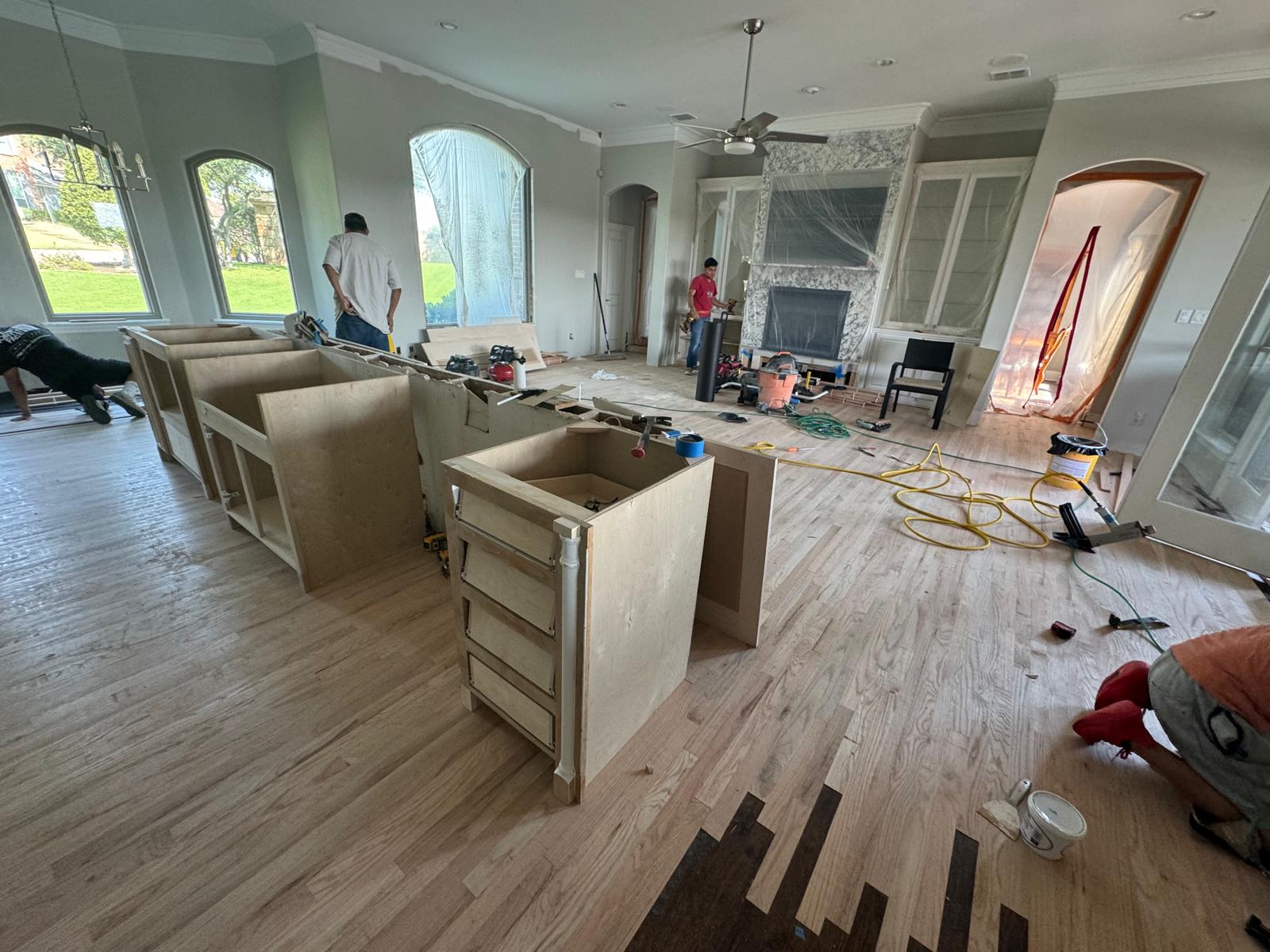
Choosing the Right Material for Your Custom Cabinets
When it comes to designing custom cabinets, one of the most crucial decisions you'll make is selecting the right material. The choice of material not only affects the aesthetic appeal of your cabinets but also their durability, functionality, and cost. In this guide, we'll explore various cabinet materials, their benefits, and considerations to help you make an informed choice.
Common Cabinet Materials
- Solid Wood
- Plywood
- MDF (Medium-Density Fiberboard)
- Particle Board
- Laminate
Solid Wood
Solid wood is a classic choice for custom cabinets. It offers natural beauty and durability. Different types of wood can be used, each with its own characteristics.
- Hardwoods (e.g., oak, maple, cherry) are known for their strength and rich grain patterns.
- Softwoods (e.g., pine, fir) are lighter and often less expensive but can be less durable.
- Wood can be stained or painted to match your decor.
Plywood
Plywood is made from thin layers of wood veneer glued together. It is a popular choice for cabinets due to its strength and resistance to warping.
- Available in various grades for different quality levels.
- More affordable than solid wood while providing similar aesthetics.
- Can be used for cabinet boxes with solid wood fronts for a balanced look.
MDF (Medium-Density Fiberboard)
MDF is an engineered wood product made from wood fibers, wax, and resin. It is smooth and easy to paint, making it a good choice for modern designs.
- Cost-effective compared to solid wood and plywood.
- Less prone to warping and cracking.
- Not as strong as solid wood, so it's best used for cabinet doors rather than structural components.
Particle Board
Particle board is made from wood chips and sawdust glued together. It is the most economical option but comes with some trade-offs.
- Often used in lower-end cabinets due to its low cost.
- Less durable and more susceptible to moisture damage.
- Best suited for hidden areas or as a backing material.
Laminate
Laminate is a synthetic material that can mimic the look of wood or other materials. It is applied over a core material like particle board or MDF.
- Highly resistant to scratches and stains.
- Available in a wide variety of colors and patterns.
- Less expensive but can be less durable than wood.
Factors to Consider When Choosing Cabinet Materials
- Budget: Determine how much you can afford to spend on materials.
- Durability: Consider the longevity and wear resistance of the material.
- Aesthetic: Choose a style and finish that matches your overall design vision.
- Maintenance: Some materials require more care than others.
- Environmental Impact: Consider sustainable options if eco-friendliness is important to you.
Conclusion
Selecting the right material for your custom cabinets is a critical step in achieving the perfect look and functionality for your space. Each material offers unique benefits and considerations, making it essential to evaluate them based on your specific needs. By understanding the characteristics of these materials, you can make an informed decision that will enhance the beauty and practicality of your home.